
When it comes to fire safety, fire extinguishers are one of the most important pieces of equipment you can have on-site. While we all hope they are never needed, having the right fire extinguisher available – and ensuring it is properly maintained and serviced – can prevent a small fire from becoming a life-threatening emergency.
At Prevention 1st, we are specialists in fire safety compliance, helping businesses, landlords, and duty holders understand their responsibilities. Here’s what you need to know about fire extinguishers in the UK.
Why Do You Need Fire Extinguishers?
- First line of defence – Fire extinguishers allow for an immediate response to small fires, often stopping them from spreading.
- Legal compliance – Under the Regulatory Reform (Fire Safety) Order 2005, the “responsible person” must provide appropriate firefighting equipment.
- Peace of mind – Knowing extinguishers are on hand and properly serviced gives reassurance to staff, residents, and visitors.
Who Needs Fire Extinguishers and in What Properties?
Fire extinguishers are required in almost all premises except single private dwellings. Examples include:
- Offices and workplaces
- Shops, restaurants, and hospitality venues
- Schools, colleges, and universities
- Healthcare facilities
- Residential blocks and communal areas
- Industrial buildings and warehouses
If your building is used by employees, tenants, or the public, you need to ensure fire extinguishers are installed and maintained.
Who Can Use Fire Extinguishers?
Only trained individuals should use fire extinguishers. Employers have a duty to provide fire safety training so staff understand:
- When it is safe to attempt to tackle a fire.
- Which type of extinguisher is suitable.
- How to operate extinguishers correctly.
Training is essential, as using the wrong extinguisher on the wrong class of fire can be dangerous.
Fire Extinguisher Classes and Their Uses
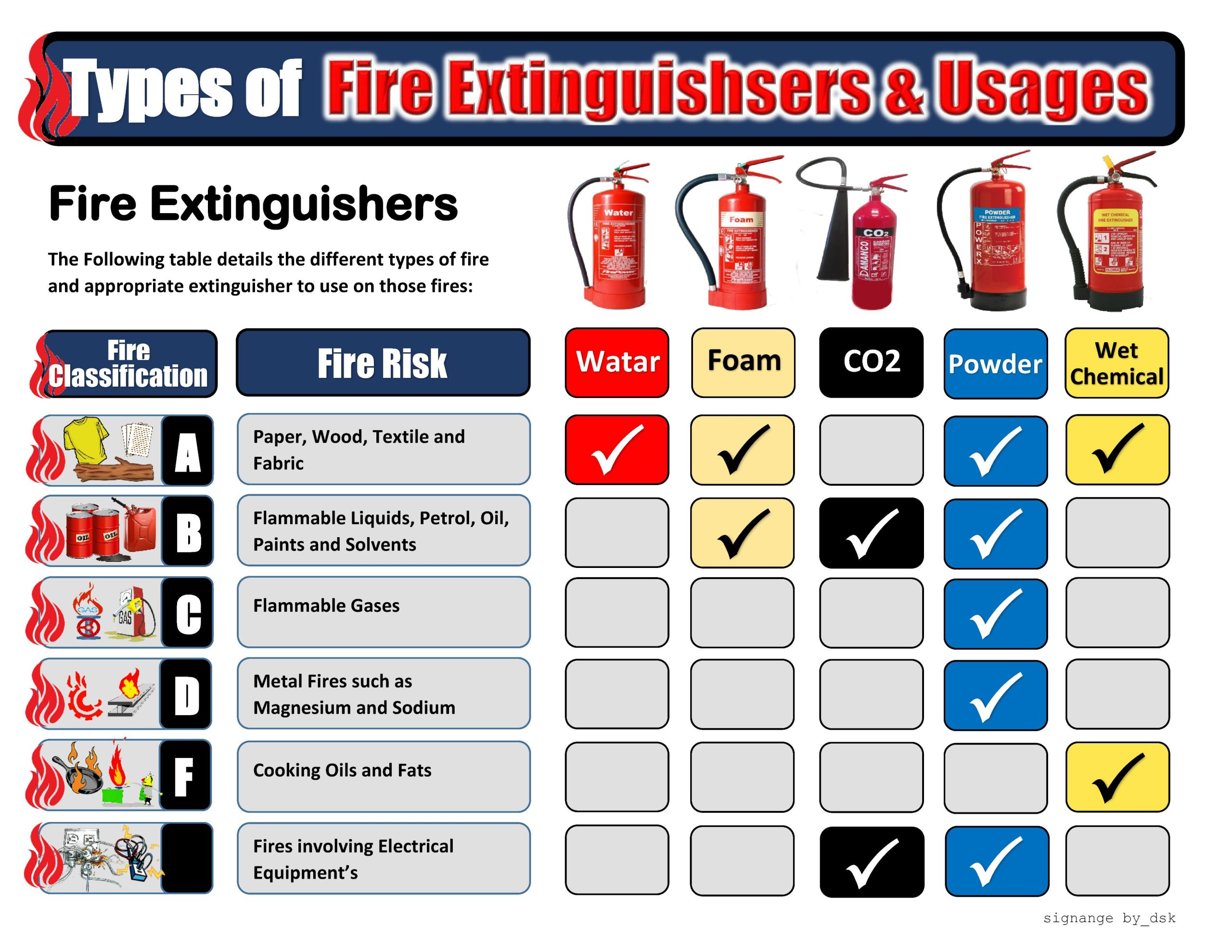
There are several fire extinguisher types, each designed for specific fire risks:
- Class A (solids – wood, paper, textiles): Water, foam, or dry powder.
- Class B (flammable liquids – petrol, oils, solvents): Foam, dry powder, or CO₂.
- Class C (flammable gases – propane, butane, methane): Dry powder.
- Class D (metals – magnesium, lithium, aluminium): Specialist dry powder.
- Class F (cooking oils and fats): Wet chemical.
- Electrical fires: CO₂ or dry powder (⚠ never water).
Choosing the correct fire extinguisher for your property is vital to safety and compliance.
Fire Extinguisher Supply & Servicing – Prevention 1st
At Prevention 1st, we provide:
- Fire extinguisher supply and installation – ensuring you have the correct type and number of extinguishers for your premises.
- Fire extinguisher servicing and maintenance – keeping your equipment compliant with BS 5306.
- Fire safety training – so staff and residents know how to use extinguishers effectively.
Having the right fire protection equipment in place is not just best practice – it’s a legal requirement.
If you need a quote for new fire extinguishers, or require servicing of existing extinguishers, contact Prevention 1st today. We’ll ensure you stay compliant, protected, and prepared.